Emerald Ash Borer
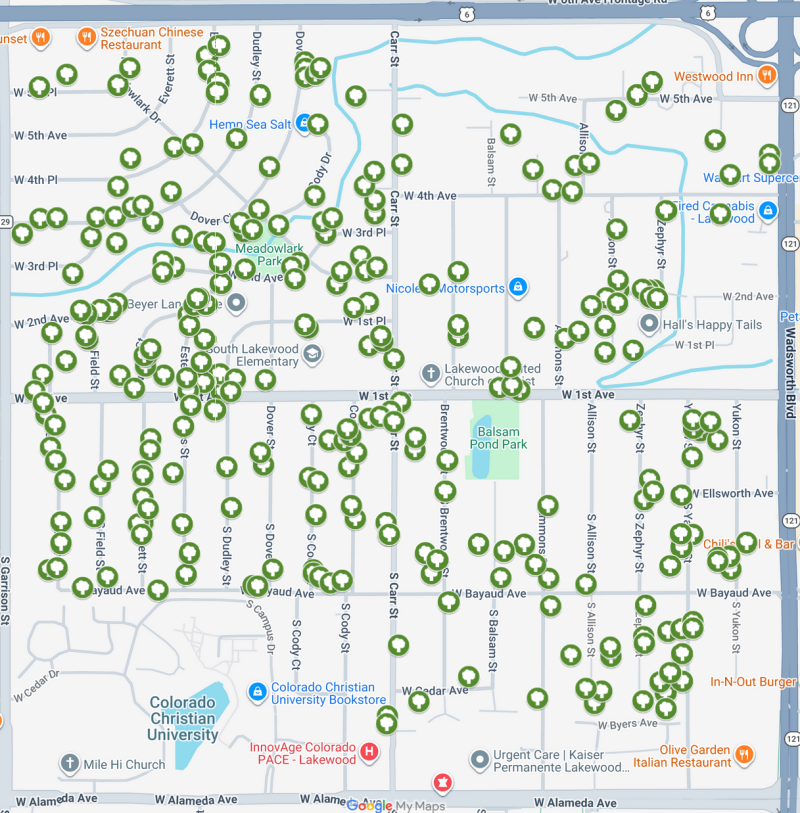
Here in the Mid‑Lakewood Civic Association neighborhood (Lakewood, CO), many of our stately ash trees are at serious risk from the invasive beetle Emerald Ash Borer (EAB). See the map below to see the various Ash Trees that have been documented in our neighborhood.
This pest has already been confirmed in the Denver-Front Range area. Because ash trees (genus Fraxinus) make up roughly 15 % of Colorado’s urban forest, the arrival of EAB poses a neighborhood-wide threat. We’re asking neighbors to keep an eye on the ash trees on your property—and to take action now if you value their health and longevity.
Signs of EAB Infestation
If you’re wondering what to look for, here are key warning signs of EAB attack:
-
Canopy thinning and branch die-back: The top of the tree may start losing leaves, making the crown look sparse. EAB larvae under the bark reduce the tree’s ability to move nutrients and water.
-
Smaller or fewer leaves: As the tree becomes stressed, it may produce smaller foliage or fewer leaves in the canopy.
-
“D-shaped” exit holes in bark: Adult beetles emerge from the tree, leaving small D-shaped holes about 2–3 mm wide.
-
S-shaped (serpentine) tunnels under bark: If bark is peeled away you may see winding galleries under the surface just under the bark where larvae feed.
-
Bark flaking or splitting: The feeding activity causes bark to crack, split, or fall away. Twigs and branches, especially at the top, may die off.
-
Woodpecker activity: Because the larvae are under the bark, woodpeckers may target infested ash trees and you may see increased pecking marks.
If you notice any of these signs, it’s time to act—and if you have healthy ash trees, now is the time to start a prevention plan.
Create Your Own Website With Webador